Wednesday, July 13, 2011

KUNJUNGAN KE-3

Kunjungan ke-3 ke Negeri di Bawah Bayu itu
Lepas 2minggu balik baru buat entri pasal ni
Hihi...balik2 ni bz, so sekarang la baru ade masa..
Jalan2 tengok suasana kat sana..mane la tau nanti kena posting kat sana 
Tapi...harap2 nya tak...:^_^
Dalam banyak2 tempat yang sy pergi, Kundasang is the BEST place!!!!
Suasana pemandangan yang penuh kehijauan yang berlatarbelakangkan pemandangan Gunung Kinabalu
Sungguh mendamaikan n I really2 miss that place
Agak mengecewakan juga kerana cuti yang lepas tak sempat berkunjung ke sana.
Kudat, destinasiku pada percutian yang lepas.
Agak menarik~~~
Dapat melihat pemandangan The Tip of Borneo-tempat pertembungan Laut Sulu n Laut China Selatan

The Tip of Borneo


 Bakso Kudat....bakso paling sedap y penah jumpa kt SABAH


 Pantai Bak-Bak


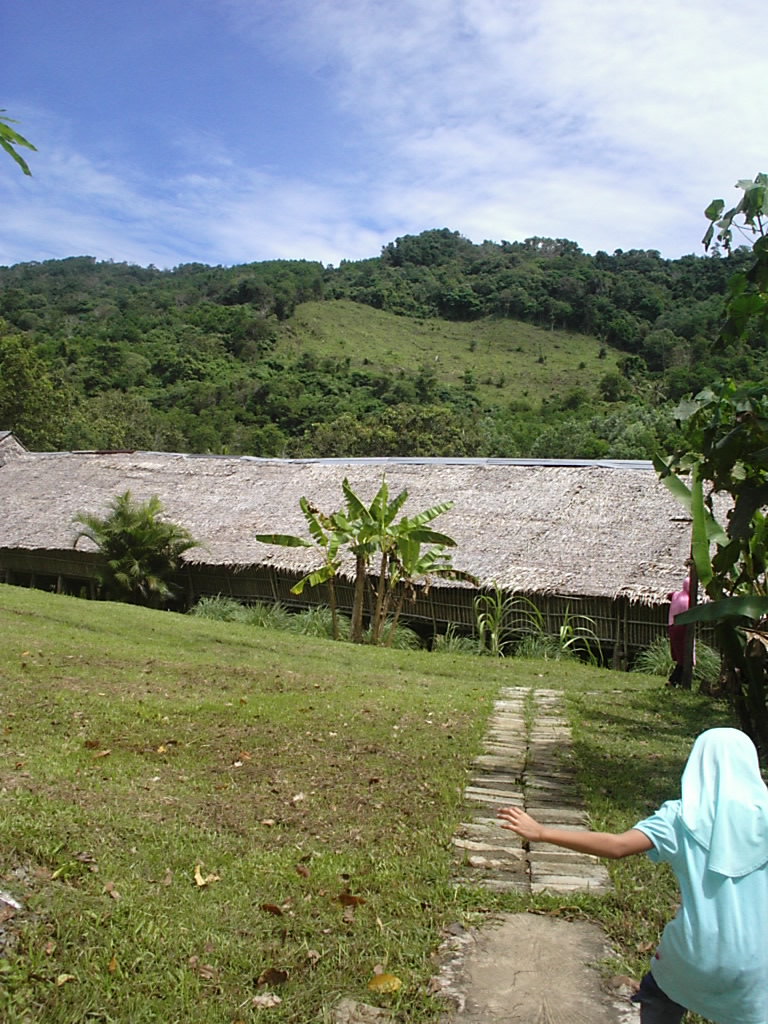
Rumah Panjang Kaum Rungus
Kg. Bavanggazo
Kudat, SABAH

Hopefully, dapat berkunjung ke Negeri di Bawah Bayu lagi.....NICE!!!

Stumble
Delicious
Technorati
Twitter
Digg
Facebook
Yahoo
Feed

Tuesday, July 12, 2011

...:::pErsaHabaTan seUmuR HidUp:::...

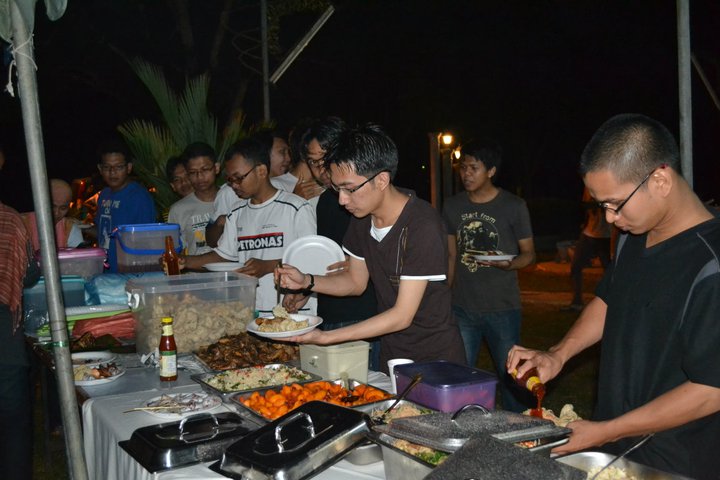
The Grand Reunion Smachian0307

Mengungkap kembali kenangan bersama selama 5 tahun di SMACH tercinta.
Setelah 4 tahun berpisah kini kami bersua kembali di tempat pertemuan itu.
Kenangan yang tidak akan dilupakan sepanjang hayat.
Disini kami belajar mengenal erti persahabatan.
Segala suka dan duka dikongsi bersama.
Selain tempat menimba ilmu, di situ juga tempat bertemu sahabat2 yang terbaik yang pernah saya jumpa.
Khas untuk sahabat2 ku sekalian,
persahabatan itu anugerah daripada Allah s.w.t
sama-samalah kita menjaga ukhwah kita yang sudah lama terjalin.


Merindui senyuman-senyuman manis sahabatku sekalian.
~~eVerLasTinG meMoriEs~~
LOVE U ALL!!!!


Stumble
Delicious
Technorati
Twitter
Digg
Facebook
Yahoo
Feed

Monday, April 11, 2011

multiple intelligences

by Dr.Howard Gadner (1983)
  • Linguistic intelligence ("word smart")
  • Logical-mathematical intelligence ("number/reasoning smart")
  • Spatial intelligence ("picture smart")
  • Bodily-Kinesthetic intelligence ("body smart")
  • Musical intelligence ("music smart")
  • Interpersonal intelligence ("people smart")
  • Intrapersonal intelligence ("self smart")
  • Naturalist intelligence ("nature smart")

It is important for teachers to care about multiple intelligence; according to Kagan (2000), there are ten top reasons why teachers should care about MI in the classroom of which using of multiple intelligence in the classroom will better prepare students for tomorrow's complex making, making the curriculum accessible to all students, and making the content area engaging and exciting to all students are only three. Students should be taught based on their ability and ways of learning; active and involved teaching is a step towards students' academic success. MI asks the question, in what ways are students smart, rather than, are they smart. Teachers generally carry the belief that all students are capable of achieving; MI considers this and indicates the tools, teaching strategies that will bring forth such success (Denig, 2004).

Stumble
Delicious
Technorati
Twitter
Digg
Facebook
Yahoo
Feed

Sunday, April 10, 2011

giFted LeaRners

The Gifted StudentBut....
· Asks many questions and is very curious
· Possesses a large amount of information
· Has a good memory
· Easily gets "off task" and "off topic"
· Is impatient when not called on in class 
The Gifted StudentBut..
· Learns new information quickly
· Retains information easily
· Masters reading skills earlier 
· Demonstrates strong abilities in math
· Displays unusual academic achievement
· Finishes classwork quickly
· Is easily bored
· Can become disruptive in class
· Shows strong resistance to repetitive activities and memorization
· Completes work quickly but sloppily
The Gifted StudentBut....
· Is interested in many things
· Becomes involved in a variety of activities
· Is motivated to try new things
· Enjoys a challenge 

· May resist working on activities apart from areas of interest
· Leaves projects unfinished
· Takes on too much and becomes overwhelmed
The Gifted StudentBut....
· Thinks independently
· Expresses unique and original opinions
· Is self-motivated
· Challenges authority
· Does not handle criticism well
· Does not work well in groups
The Gifted StudentBut....
· Uses higher level thinking skills (analysis, synthesis, evaluation)
· Makes connections other students don't see
· Considers unusual approaches to problem-solving

· Tends to be absent-minded regarding practical details
· Forgets homework assignments
The Gifted StudentBut....
· Has a strong sense of justice
· Likes to debate current issues and real life problems
· Can be very critical of self and others
· Likes to argue a point
· Is a perfectionist and expects others to be perfect as well
The Gifted StudentBut....
· Has a sophisticated sense of humor
· Understands subtle humor
· Enjoys plays on words and satire
· Easily gets carried away with a joke
· Has a tendency to become the "class clown"
The Gifted StudentBut....
· Demonstrates strong expressive skills
· Is sensitive to feelings of others
· Elaborates on ideas
· Shows skill in drama/art/music/language
· Sometimes perceived as a "know-it-all" by peers
· Is sometimes "bossy" to peers in group situations

Stumble
Delicious
Technorati
Twitter
Digg
Facebook
Yahoo
Feed

Wednesday, March 23, 2011

caRL RogErs

“The only person who is educated is the one who has learned how to learn - and change”


 “People are essentially trustworthy, that they have a vast potential for understanding themselves and resolving their own problems without direct intervention on the therapist’s part, and that they are capable of self-directed growth if they are involved in a specific kind of therapeutic relationship.”


“I have days when I think that educational institutions at all levels are doomed, and perhaps we would be well advised to bid them farewell---and let true learning begin to blossom outside the stifling hallowed halls.”


Stumble
Delicious
Technorati
Twitter
Digg
Facebook
Yahoo
Feed

Wednesday, March 16, 2011

BRUNER & DISCOVERY LEARNING IN MATH

Discovery learning is an inquiry-based, constructivist learning theory that takes place in problem solving situations where the learner draws on his or her own past experience and existing knowledge to discover facts and relationships and new truths to be learned. 

Discovery learning encourages students to actively use their intuition, imagination, and creativity.


Bruner puts forward a learning theories that consists of three representational stages:-

a) Enactive stage (0-2years old) -------------> action
     > students who learn addition and subtraction using things, 
    e.g base ten blocks, woods, stone, beads etc
b) Iconic stage (2-4years old) ---------------> image
     > students use paper and pencil to solve problem. they are able to visualize image
     e.g solve 234+674
c) Symbol stage (5-7years old) ---------------> symbol
    > students are able to use symbol for abstract. 


According to Bruner, learning begins with an action that involves touching, emotion and manipulation.


THE PRINCIPLES OR THEOREMS OF LEARNING MATHEMATICS

construction principle
Better for a student to learn a new concept in mathematics is to construct his own presentation. The teacher presents examples and the students work with the examples until they discover the interrelationships.
e.g teacher introduce the concept of gradient by giving formula. teacher ask students what they found after discovering the formula. students should realize some basic characteristics about gradient :::::::::D--two parallel lines have same gradient
               :::::::::D--horizontal line has zero gradient
               :::::::::D--positive & negative gradient
  
notation principle
notation used in teaching should be suitable with intellectual development stage. For example, brackets should used when teaching primary school......
e.g 2+(3x5)=17        e.g use of ( X ) and ( . ) in multiplication 

contrast & variation principle
most of the mathematical concepts are easy to understand if they are compared with other concepts.
> multiplication & division
> differentiation & integration
> intersection set & union set 

connectivity principle  
every mathematical concept, principle and skill is connected to other concepts, principles & skills 
e.g concept of gradient  of a straight line
      - tangent of the curve at a certain point
      -derivative of dy/dx
      -continuous function
      -graphs of increasing & decreasing functions


Stumble
Delicious
Technorati
Twitter
Digg
Facebook
Yahoo
Feed

Tuesday, March 8, 2011

constructionism......(w9)

Seymour Papert defines that 
"The word constructionism is a mnemonic for two aspects of the theory of science education underlying this project. From constructivist theories of psychology we take a view of learning as a reconstruction rather than as a transmission of knowledge. Then we extend the idea of manipulative materials to the idea that learning is most effective when part of an activity the learner experiences as constructing a meaningful product."
CONSTRUCTIONISM
  • learning occurs "most felicitously" when constructing a public artifact
  • more about methods
  • constructing i a good way to get mental constructions build
  • learning by making or create something
  • learning is most effective when the learner experiences as constructing a meaningful product 
Constructivism is deeper in its application, than could be conveyed by any such formula
Let students play around with things. Let them try to do something or taste it. 
For example, they make construction such as build sand castle or by using their toys. LEGO or puzzle.
Students will get satisfaction when they do their own construction.

Stumble
Delicious
Technorati
Twitter
Digg
Facebook
Yahoo
Feed